The meetup took place last Friday, April 24th, at the FaHCE (Facultad de Humanidades y Ciencias de la Educación) in La Plata. The talks came from different places: empirical software engineering, custom coding agents, and multi-agent systems. The conversations continued afterward over beers and food provided by the organization.
Empirical software engineering: the scientific compass in the age of LLMs
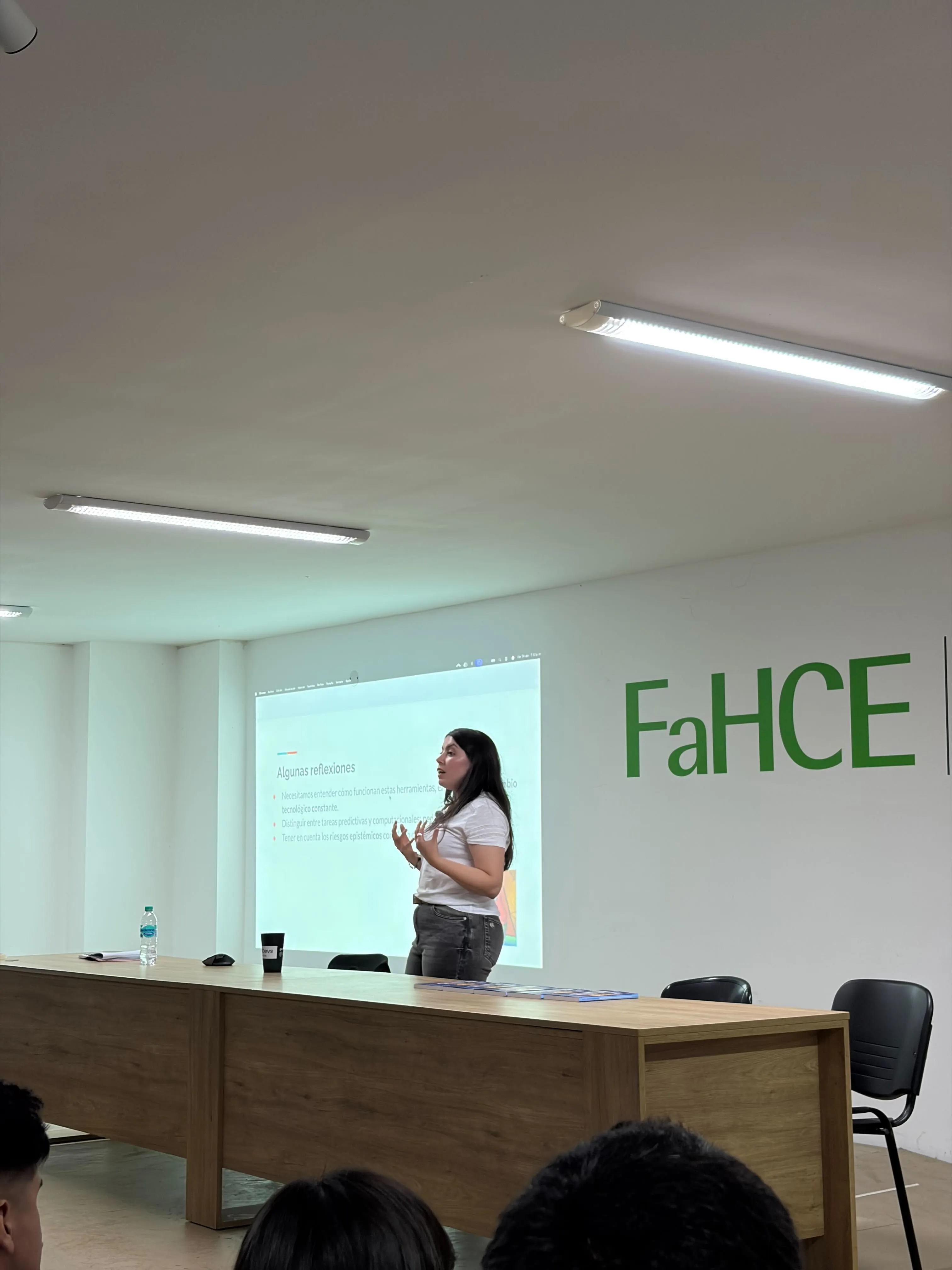
The first talk was “Ingeniería de software empírica: La brújula científica en la era de los LLMs” (“Empirical software engineering: the scientific compass in the age of LLMs”) by Florencia Riva, a sociologist working at LIFIA.
Florencia’s talk pushed against a common temptation: asking LLMs for answers when what we actually need is a reproducible method. Shaped by her background in sociology, she argued that LLMs can be useful assistants, but we should not rely on them to do the actual math for us. Instead, they can help us reach deterministic methods (like code) that perform calculations and analysis in a reproducible way.
For empirical software engineering, that distinction matters. The work still depends on careful observation, measurement, and verifiable results.
A custom-made coding agent
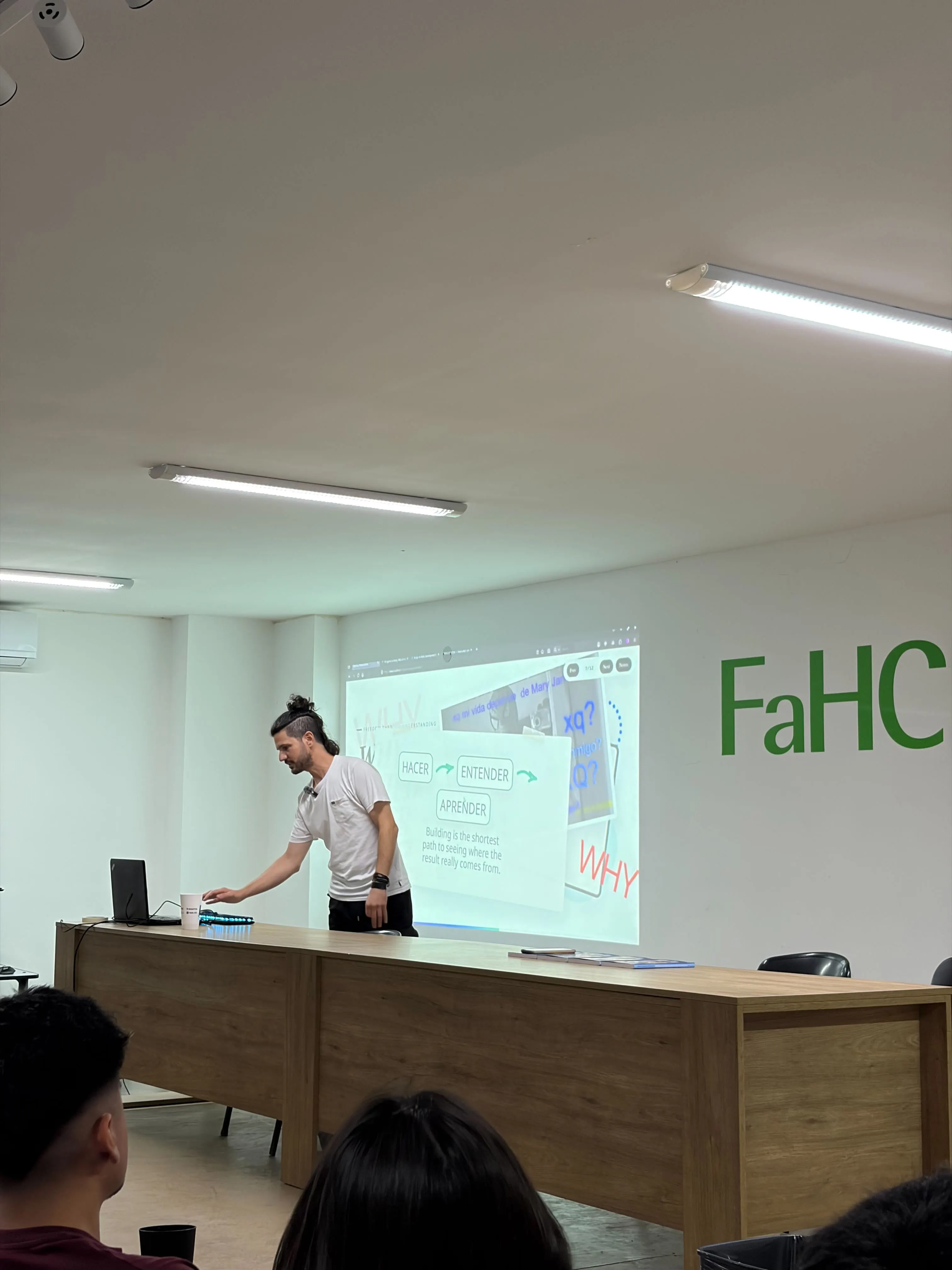
The second talk was “Agente de código hecho a medida” (“A custom-made coding agent”) by Fernando Martínez from SINAPTIA.
Fernando presented Detritus, a deliberately tiny coding agent built in Ruby. The point was not to build the most capable assistant, but almost the opposite: to make the agent as simple as possible in order to understand what really makes these tools useful. His talk separated the problem into three parts—the model, the harness, and the workflow—and argued that when the model and harness are intentionally small, the workflow becomes much easier to see and reason about.
That experiment helped him test which practices survive across tools and models. If a workflow works with Detritus, a weak and minimal agent, it will probably work with more powerful agents too. The takeaway was less about replacing existing tools and more about gaining freedom: understanding the harness, avoiding vendor lock-in, and building a small personal lab for experimentation.
Multi-agent architectures: methodology and practice
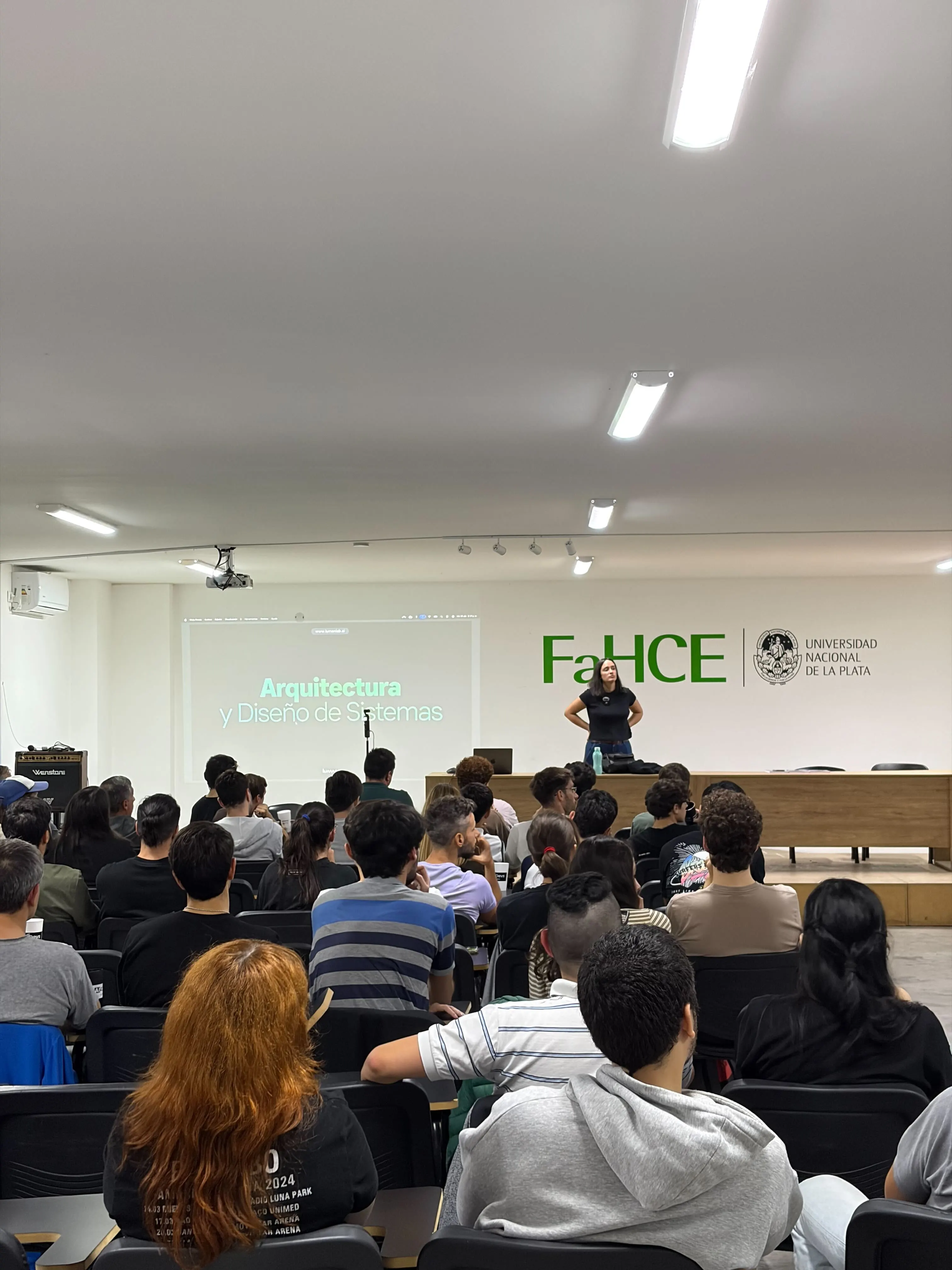
The final talk was “Arquitecturas multiagente: metodología y práctica” (“Multi-agent architectures: methodology and practice”) by Lara González from Lumen Lab.
Lara focused on the parts of multi-agent systems that get hard quickly: deciding what each agent owns, how they coordinate, and where the handoffs can fail. She covered both methodology and practice, including how responsibilities should be split and what trade-offs appear when multiple AI components have to work together toward a goal.
Community, sponsors, and thanks
After the talks, there was time to keep talking over beers and food. These community spaces make it easier to compare notes, ask questions, and see how other people are applying AI in real projects.
Huge thanks to the AI4Devs organizers, FaHCE for hosting the event, and the sponsors who made the meetup possible: SINAPTIA, Fudo, Purrfect AI, NaNLABS, Genom IT, SEDICI, and FaHCE.
The useful part of meetups like this is not the slide deck. It’s hearing how other people are testing the same tools, where they’re skeptical, and what they’ve managed to make work.